


$168k/yr selling jewelry for 10 years straight with this simple system





I’ve made an average of $168,000 a year selling jewelry for 10 years straight.
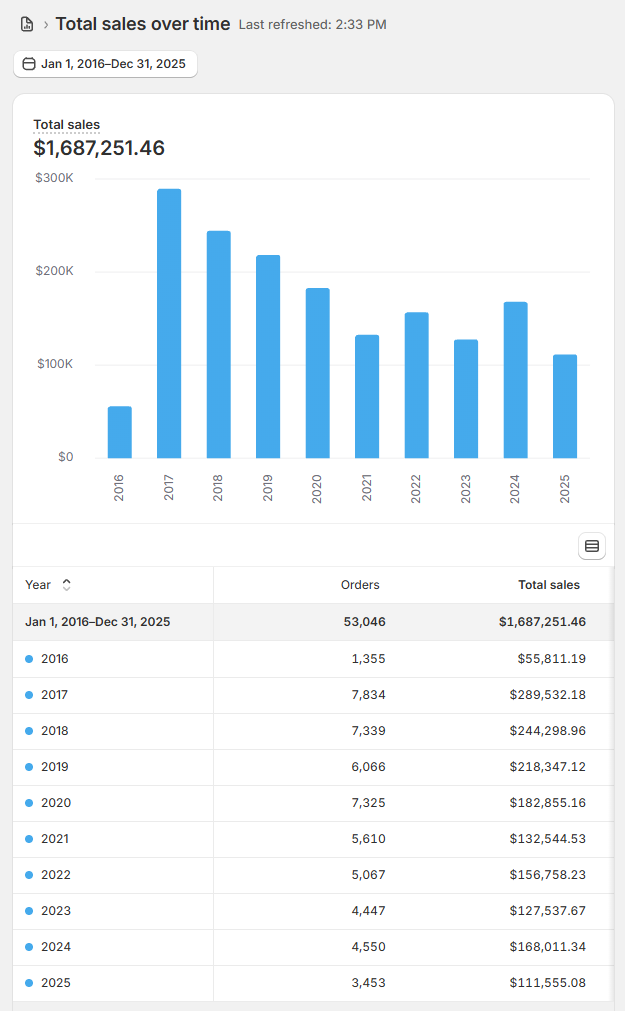
The same underrated system, every single year, through algorithm changes, Etsy updates, political and economic changes.
There was even a whole year where my Instagram got shut down, and I still hit six figures!
We’ll walk through the 6 parts of this simple system, and the one most makers don’t take seriously enough.
It’s the reason I kept making money even the year I lost Instagram, and how I’ve stayed consistent with my numbers.
Influencer marketing
This is one of the biggest ways I bring in traffic and sales without relying on going viral or constantly posting on social media.
I usually call it media outreach or influencer marketing, but to me, they mean the same thing.
It’s basically having people with existing audiences use and recommend your handmade products.
And every single time I’ve been featured somewhere, I’ve noticed a jump in sales afterward.
One of the biggest examples was when my waffle necklace was featured on the TV show Parks and Recreation and worn by Amy Poehler.
The best part is, I didn’t have to pay for it or even work to make it happen.
That same month, I made $20,000, and the overall sales in my business continued growing for years after that.
Media outreach does two things at the same time.
First, it builds word of mouth.
Every person who buys your product because someone else recommended it becomes another potential person who might recommend it too.
Second, it helps build your SEO. Every time your brand gets mentioned in a blog, magazine, or feature, it creates a backlink.
That’s important because backlinks help your shop rank higher on Google Search, which makes it easier for customers to find you online and helps you stand out from competitors.
One of the things I love most about media outreach is that it compounds over time.
It builds on itself. The leverage is incredible.
It’s not completely passive, but it’s probably the closest thing to it, the effort compared to the payoff is honestly pretty small.
Here’s how it works…
An influencer posts about your jewelry, or a blog or magazine features your work.
And the cool part is, even if that feature happened two years ago, it can still be sending customers to your shop today.
The longer you keep doing outreach, the more momentum and equity your shop builds over time.
Eventually, you can even stop actively reaching out, and the momentum continues on its own.
That’s something that’s true for very few types of marketing, maybe except for long-form content like YouTube, which takes way more time and effort than outreach.
And sometimes, media professionals will even feature your work without you having to pitch them at all.
This is how strangers who’ve never heard of you before end up finding your shop.
I actually have an entire step-by-step roadmap that teaches how to do this, especially if your goal is to finally start making consistent income from your shop.
So if you want to dive deeper into it, I have a free workshop and you can check that out after you finish reading this, just go through this link: https://tinyurl.com/yx45esvf
Now, the next part of the system is similar in some ways, but it works very differently. A lot of makers are scared of it for reasons I really want to debunk.
Paid Ads
Paid ads are a huge part of my system for generating consistent sales.
The easiest way to think about it is like an ATM, You put $1 in and get $2 back.
Of course, those are just example numbers, and it doesn’t always work like that if the ads aren’t set up properly.
But one of the biggest reasons I love paid ads is because the barrier feels much lower than content creation or constantly posting on social media.
Once you have a strong ad creative, meaning the image or video you’re using for the ad, it becomes pretty passive.
Unlike social media posts that usually feel outdated after 24 hours, a good ad can keep running quietly in the background and continue bringing in sales while you focus on other things you actually enjoy doing.
There is a big “but” here, though.
Before you spend even a single dollar on ads, your product and website need to convert with strangers. Cold traffic, people who have never heard of you before.
If strangers aren’t already buying your work, ads won’t magically fix that.
They’ll just burn through your money faster because ads amplify whatever is already broken at the product or website level.
That’s why I always recommend validating first, make a few sales from strangers through your website before turning on ads.
Once your product and site are ready, the biggest factor becomes the creative.
Targeting matters too and one of the coolest things about ads is that you can target people who already follow your competitors or whose interests overlap with your ideal audience.
But at the end of the day, the creative does most of the heavy lifting.
A good product, a good website, and a strong creative are what set you up for success with paid ads.
Now yes, paid ads do require some kind of monthly budget but you already need a budget for other parts of running your business anyway, like making products or buying shipping supplies.
I’d recommend setting aside at least $100 a month for ads, that can feel like a lot when you’re first starting, but remember, the goal is for that money to turn into sales.
If you do it right, that $100 should come back as revenue and hopefully profit, which then gives you more money the following month to either scale your ads or simply keep as extra profit.
So, items 1 and 2 are how I bring strangers into my shop without having to constantly grind on social media.
But item 3 is where most makers accidentally sabotage all of that work without even realizing it.
Your own website
None of what we just talked about matters if all your traffic is going to an Etsy shop, TikTok Shop, or Instagram profile.
Those platforms are rented land, they own the rules, they can change the algorithm, increase fees, suspend your account, and there’s really not much you can do about it.
With your own website, you control everything, the design, the customer relationship, your customer email list, and the data.
You really do need your own website. Like, 100,000%.
The way I’d put it to anyone still debating this is: would you rather build a shop you can’t control, or one you can? When you frame it that way, the answer feels pretty obvious.
I think the reason a lot of makers avoid making the switch is fear.
Building a website sounds overwhelming, people assume it’ll take weeks, cost a ton of money, or require tech skills they don’t have.
But it really doesn’t have to be that complicated, especially if you’re using the right tools, like Hostinger.
I personally use Hostinger and recommend them all the time because they make the process incredibly simple.
They have a few different ways to build your store quickly, but the one I want to highlight is Horizons, which lets you build a fully functioning website in about 20 minutes.
And it’s so easy, you can literally sketch out your website on paper or in Canva, give that sketch to Horizons, and it builds the site for you without needing to touch code or do anything technical.
It’s actually kind of fun too!
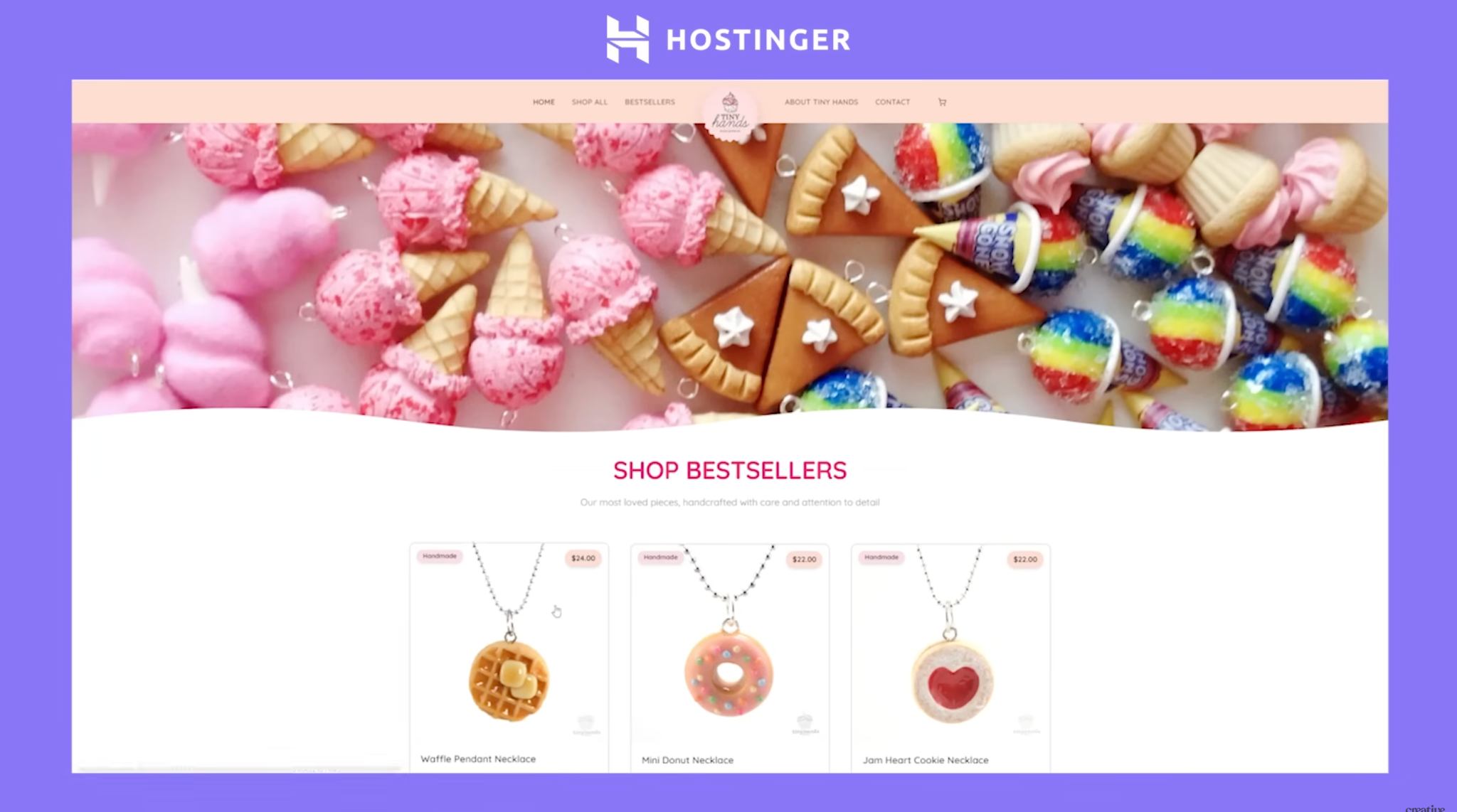
With just a few clicks, you can have a free domain, a business email address and a website where customers can shop from all in one place.
If you sign up for Hostinger, the Starter plan is probably the most useful for handmade sellers.
It comes with 70 AI credits per month, basically, you chat with Horizons to customize your site, and each message uses 1 credit.
You can also sell physical products, digital products, or subscriptions directly through your Horizons site with zero transaction fees.
Compare that to Etsy taking 6.5% from every sale, plus listing fees, plus ad fees.
The 12-month plan is the one I’d personally recommend because it’s more affordable than the monthly option and locks in the best pricing.
If you use my code MEI you’ll get an extra 10% off at checkout, plus there’s a 30-day money-back guarantee.
The link is hostinger.com/mei and the code is MEI for 10% off.
Okay, so now you’ve basically built your own website.
The next thing is the other thing you can control that beats every algorithm.
Your own email list
Your email list is another thing you fully own and control.
Most people who visit your shop aren’t going to buy the first time.
They’ll browse around, favorite a piece, bookmark the site or close the tab and completely forget about it later.
That’s where an email list becomes so valuable.
It gives you a built-in audience of people who already said, “I love your work, keep me updated.”
So when you launch something new, or even when you just need a boost in sales during a slower month, you already have people you can reach out to directly without paying for every impression.
And that’s the really important part, you control when and how often you contact your subscribers.
Algorithms don’t control your reach the same way social media platforms do.
The people on your list already chose to hear from you, that’s a huge difference compared to hoping Instagram decides to show your post to followers.
Instead of fighting for visibility in a feed, you’re landing directly in the inbox of someone who already raised their hand and said they’re interested in your work.
But here’s the thing, your email list only grows if you have traffic coming into your website, which is exactly why parts 1 and 2 of this system matter so much.
For me, my email list has consistently been the thing that turns browsers into actual paying customers and brings in sales over and over again.
I also love that once it’s set up, your email list does a lot of the selling for you automatically.
You’re not constantly trying to convince people to buy every single day the way social media often feels.
So at this point, we’ve covered traffic (media outreach and paid ads) and the foundation (website and email) you control.
The last two parts are things most people overlook, but they make a massive difference in how successful your shop becomes.
When you get these next two right, everything else we talked about becomes so much easier.
Algorithm-proof products
So what kind of products can actually sell consistently for a decade and stay mostly algorithm-proof?
The answer is giftable products.
Things people feel excited to give to someone else, or proud to tell other people they bought.
Gifts naturally come with built-in demand because there’s always another birthday, Mother’s Day, anniversary, holiday, or special occasion coming up.
And the interesting thing about gifts is that people are usually willing to spend more on others than they are on themselves.
So when your product is positioned as a gift, the price tolerance tends to go up too.
In my own jewelry business, my main product line hasn’t changed that much over the years because evergreen demand stays evergreen.
New products definitely help create fresh opportunities for press outreach, and trend-based products can give your revenue a boost during peak seasons.
But trends have never been the main source of income in my business, the foundation collection is.
That’s why you don’t need a massive catalog to start, you can begin with just 6–12 products, necklaces, candles, t-shirts, whatever the evergreen, giftable version of your craft looks like, and build from there over time.
You also don’t need to constantly design new products just to maintain consistent income.
I’ve had the same 62 charms in my shop for years and still managed to make six figures year after year.
The core collection is the bread and butter of the business, trend products are more like the cherry on top.
And now we’re at the last thing on the list, this is the part that determines whether all of the other pieces actually work long-term…
Pricing right
If I had to point to the one thing that makes everything above sustainable for a decade, it’s pricing correctly.
Most makers price their products based only on materials and the time it takes to make them but that’s not enough.
Sustainable pricing includes materials, supplies, business overhead, and the time or money spent on marketing and promotion because if you’re not pricing for marketing time, you’re essentially working for free every single week.
And that’s a big reason so many makers feel stuck, they’re putting in hours on social media, but not seeing enough profit to sustain the business or cover anything beyond just making more inventory.
But if your goal is a business that actually pays for your life, your bills, food, rent or mortgage, vacations, or even raising a family, then pricing has to reflect all of that.
Pricing correctly means your marketing work is accounted for too.
If influencer outreach takes you 4 hours in a week, that time gets paid for.
If you spend a Sunday creating ad creatives, that time is paid for.
If you take a vacation, the business doesn’t pause or fall apart because your pricing already has breathing room built in.
This is what makes a business truly algorithm-proof at a structural level.
It gives you room to experiment, to rest, and to handle life when it happens, because the math already includes those realities.
At that point, the price on your listing isn’t just the cost of the product, it’s the cost of running the entire system that gets that product into someone’s hands.
So there it is.
Influencer marketing for traffic that doesn’t depend on you posting every day.
Paid ads as your $1-in, $2-out lever once your product is already converting cold traffic.
Your own website as the foundation everything sits on.
Your email list as the audience you actually own.
Giftable, evergreen products that stay relevant for years.
And pricing that actually pays you for the time you spend marketing your business.
None of these lose value when a platform changes its rules, they all compound over time, year after year.
That’s the reason my jewelry business has paid me an average of $168,000 a year for 10 years straight.
But here’s the question most people ask next:
What about before any of this is fully in place? Where do you actually get your first wave of customers when you’re starting from zero?
I made a blog breaking down exactly that.
It’s what I’ve seen from handmade sellers who are quietly making consistent sales without having to grind on social media every day.Go read this next: https://tinyurl.com/5n7v6k4k

Unlock a Profitable Handmade Business
in Just 12 Weeks Without Using Etsy
or Social Media



FREE WORKSHOP
This workshop is for anyone who makes and sells a handmade or physical product, including jewelry designers, artists, paper designers, bath & body product makers and more!
What You'll Discover
The #1 mistake people make with Etsy & social media that causes shops to FLOP
The secret to making it with your handmade shop so it's no longer just a hobby
How to make sales in your handmade shop with ease so you can finally get to 6-figures
TAKE ME THERE
Your email address will not be published. Required fields are marked *






A sustainable handmade business demands more than just craft skills—mental rest is key. I’ve found that listening to free asmr during quick breaks helps me recharge and come back to designing jewelry with more creativity.
Really inspiring story. Building a successful jewelry business for 10 years straight takes a lot of consistency, creativity, and smart systems behind the scenes. I like how the article focuses not just on making products, but also on creating repeatable processes that help a handmade business grow sustainably over time.